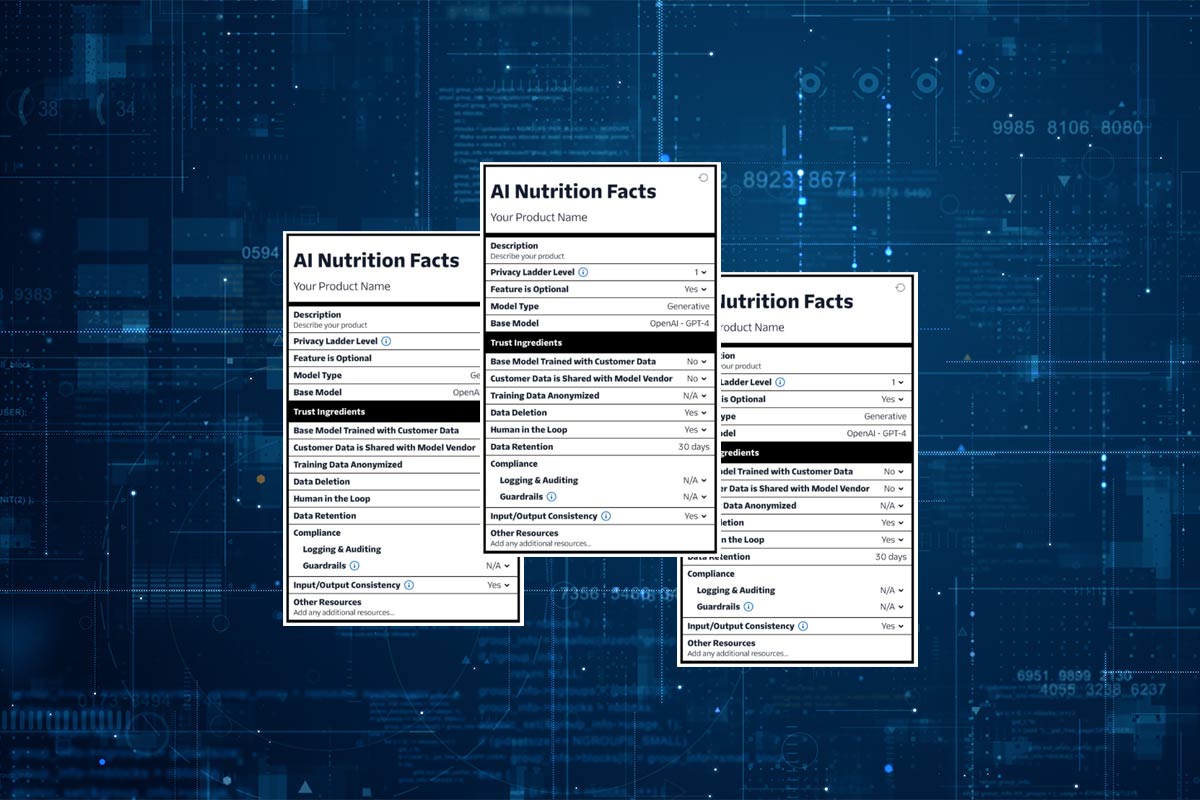
Before enabling a new AI feature in production, do you know what data it uses, where it’s processed or whether customer data is used for training? As AI capabilities expand across the digital workspace, the need for a simple way for organizations to evaluate the security and governance of these tools inspired Omnissa to introduce AI Nutrition Labels.
What is an Omnissa AI Nutrition Label?
Similar to a nutrition label on a food package, an Omnissa AI Nutrition Label provides a standardized view of the most important information about an AI-powered feature. These labels are intentionally designed to make the mechanics of AI easier to review without digging through technical documentation or vendor-specific explanations.
The label breaks down how a feature operates, what data it uses, and what governance controls apply so organizations gain the clarity necessary to decide whether a feature can be safely enabled within their environment.
How to read an Omnissa AI Nutrition Label
Each label is structured around consistent information fields that describe how the AI feature works in practice.
- Feature details and where it is used
Every label begins with the basics. This includes the feature name, a short description of what it does and where it appears across Omnissa products. It helps teams understand the operational context before reviewing technical details. - Model type and provider
This section explains what kind of AI is powering the feature. It may be a traditional algorithm, an anomaly detection model or a generative AI system. It also identifies whether the model is built by Omnissa or provided by a third party, indicating where processing occurs and how vendor dependencies may influence risk or compliance decisions. - Input data used by the feature
The Input Data section defines what information the AI feature processes to generate outputs. Depending on the capability, this may include platform telemetry, operational signals or user-submitted queries. For IT teams, this is often one of the most important sections since it directly impacts privacy and governance assessments. - Auditability of input data
Some environments require visibility into what users submit to AI features. The label indicates whether that input data can be audited. If auditing is supported, teams can review usage patterns and better understand how the feature is being adopted across the organization. - Data sovereignty and residency
For many organizations, data location is not optional. The label specifies whether data remains within its original storage region, helping confirm alignment with internal policies or regulatory requirements tied to geographic data handling rules. - Training data usage
Omnissa states that customer data is not used for training unless it has been anonymized, providing clarity for organizations that need strict separation between operational data and model development. - Guardrails for AI behavior
For features that use generative AI, the label describes whether guardrails are in place. These controls help ensure outputs remain appropriate and consistent while reducing the likelihood of unsafe or biased responses. For features not based on LLMs, this section may not apply. - Model update frequency
AI models evolve over time, and the label includes how often they are updated or retrained. Some features may follow a regular schedule, while others are updated as needed based on system changes or improvements. - Data retention
This section explains how long data is stored. Retention aligns with Omnissa’s broader privacy and data minimization approach, ensuring data is not kept longer than necessary for the feature to function. - Feature optionality
Every AI feature includes a level of control for administrators. The label explains whether the feature can be disabled or whether it is tied to broader functionality within the platform. In some cases, enabling a parent capability also enables the AI component.
Where to find Omnissa AI Nutrition Labels
Omnissa publishes AI Nutrition Labels in its product documentation for each AI-enabled feature. Currently, labels are available for features such as Insights and Guided Root Cause Analysis inside Workspace ONE Experience Management. Additional labels are expected as more AI capabilities are introduced across the platform.
A clearer way to evaluate AI in the Digital Workspace
AI adoption in the enterprise is becoming embedded in day-to-day operations, increasing the need for consistent evaluation standards.
Omnissa AI Nutrition Labels give IT and security teams a repeatable way to review AI features before they are enabled. Instead of relying on assumptions or high-level descriptions, teams can evaluate how each feature uses data, what controls exist and how it fits into existing governance models.
As AI becomes more integrated into digital workspace platforms, organizations’ need for structured ways to maintain visibility without slowing adoption is only increasing. If your organization is planning to adopt AI-enabled Workspace ONE capabilities, now is the time to ensure your governance and deployment strategy is ready before these features become standard across your environment. Reach out to Tech Orchard at help@techorchard.com today for help evaluating operational fit and implementing Omnissa technologies to improve your organization’s technical security and efficiency.